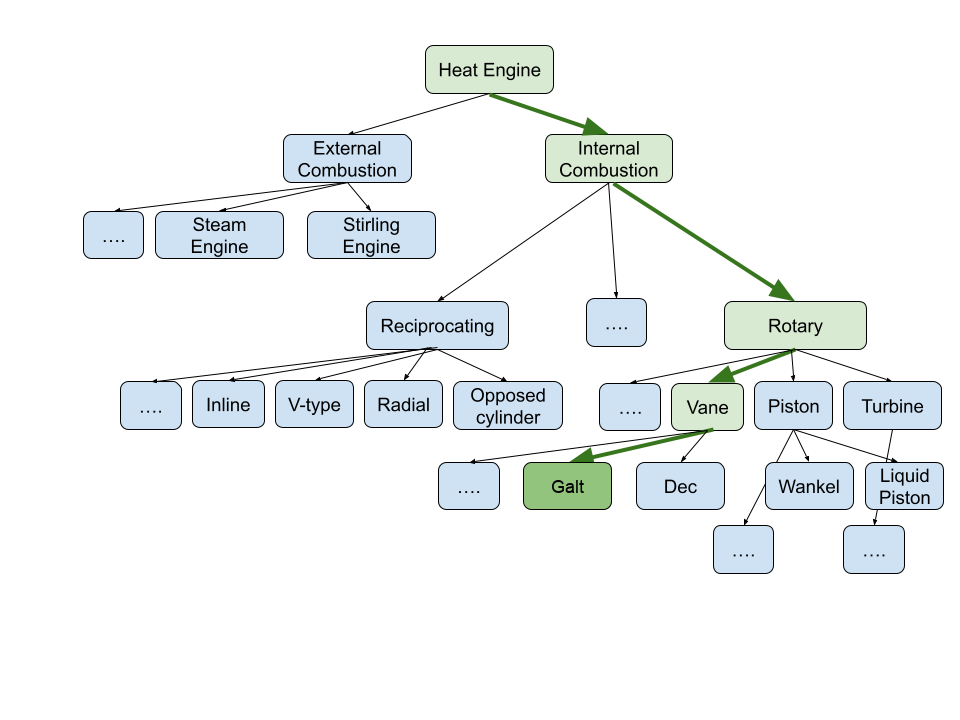
Galt Engine is a new internal combustion engine architecture designed to convert combustion heat into mechanical shaft power, electrical energy or a combination of both. It is based on the rotary-vane principle but replaces the mechanical linkages that constrained earlier designs with precise electrical control.
Direct rotary motion with fewer mechanical constraints
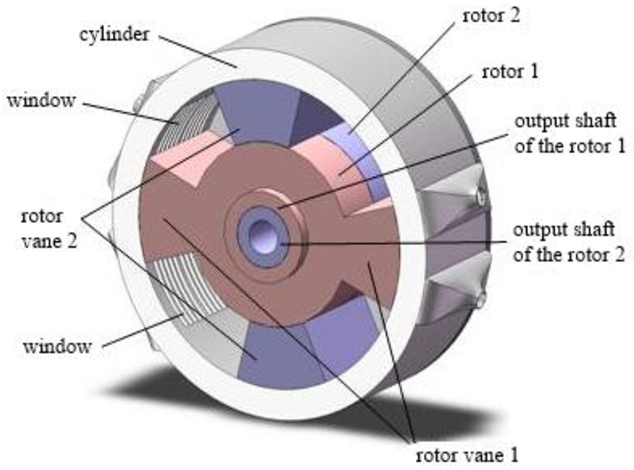
A rotary-vane engine creates and varies its combustion chambers between intermeshing vanes mounted on two rotating shafts. The motion at the output is rotational from the outset. Historical examples of the rotary-vane principle show how the architecture differs from a conventional piston engine.
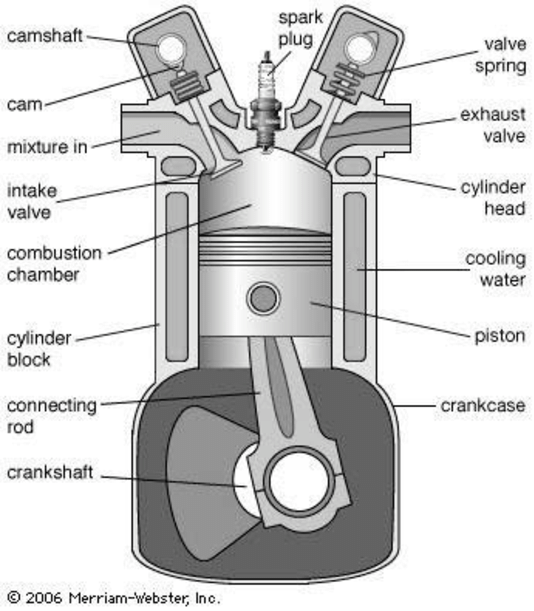
Compared with a reciprocating piston engine, the architecture removes:
- the slider-crank mechanism
- the conventional valve train and camshaft
- reciprocating pistons and the repeated reversal of their motion
The result is a more direct path from combustion pressure to shaft rotation, with fewer mechanically constrained elements between the combustion chamber and the output.
More power strokes per revolution
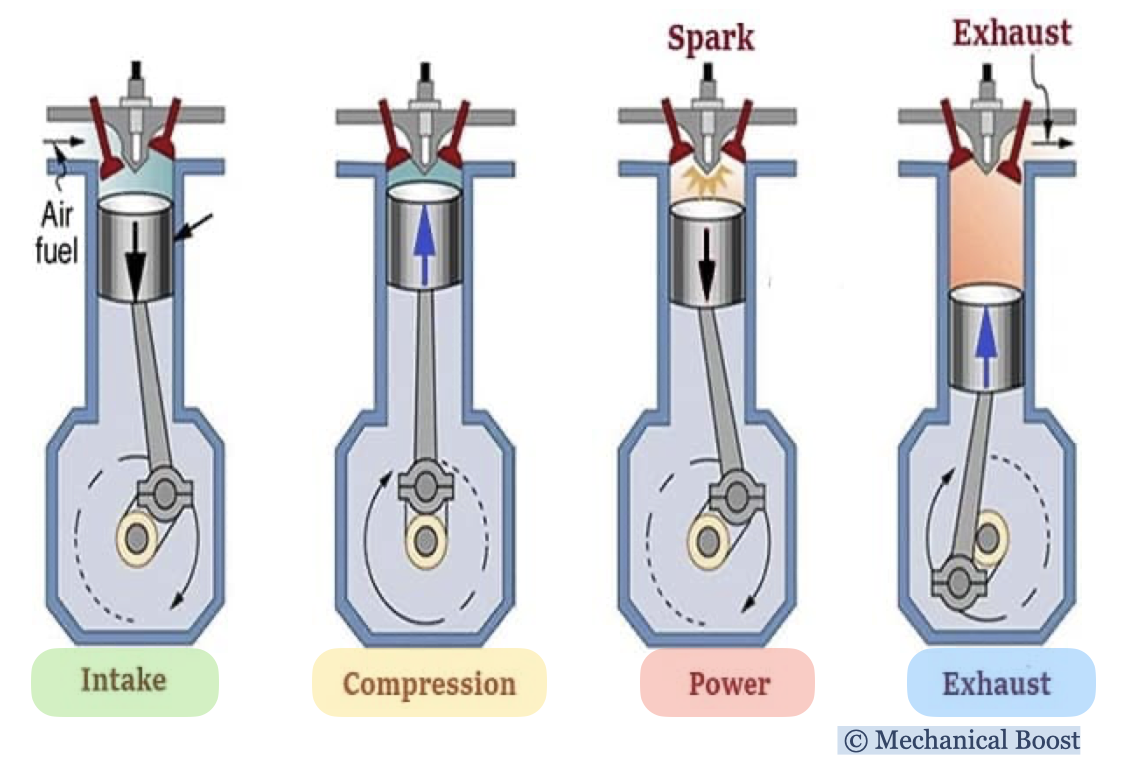
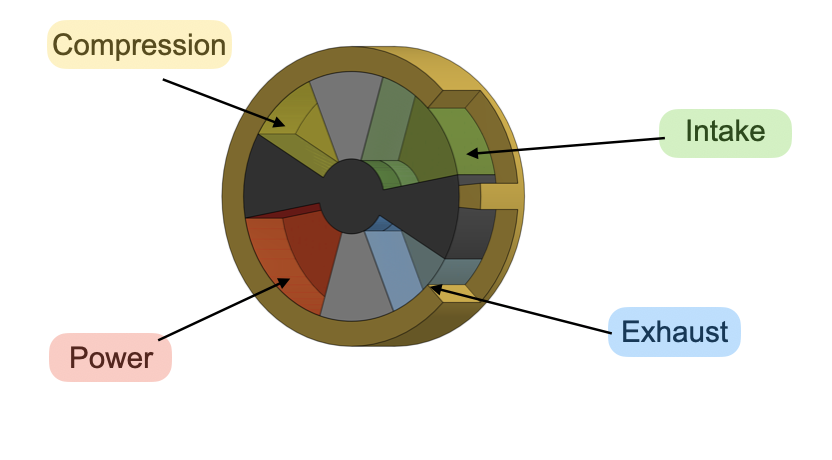
In a conventional four-stroke, single-cylinder piston engine, the crankshaft completes two revolutions for each power stroke. In a rotary-vane chamber, intake, compression, combustion and exhaust take place simultaneously in different parts of the chamber.
With the two-vane-per-shaft arrangement illustrated in Figure 4, four power strokes can occur during each shaft revolution. Additional vanes can create more working chambers. This gives the architecture the potential to deliver higher power density from a smaller and lighter machine.
Torque without the slider-crank penalty
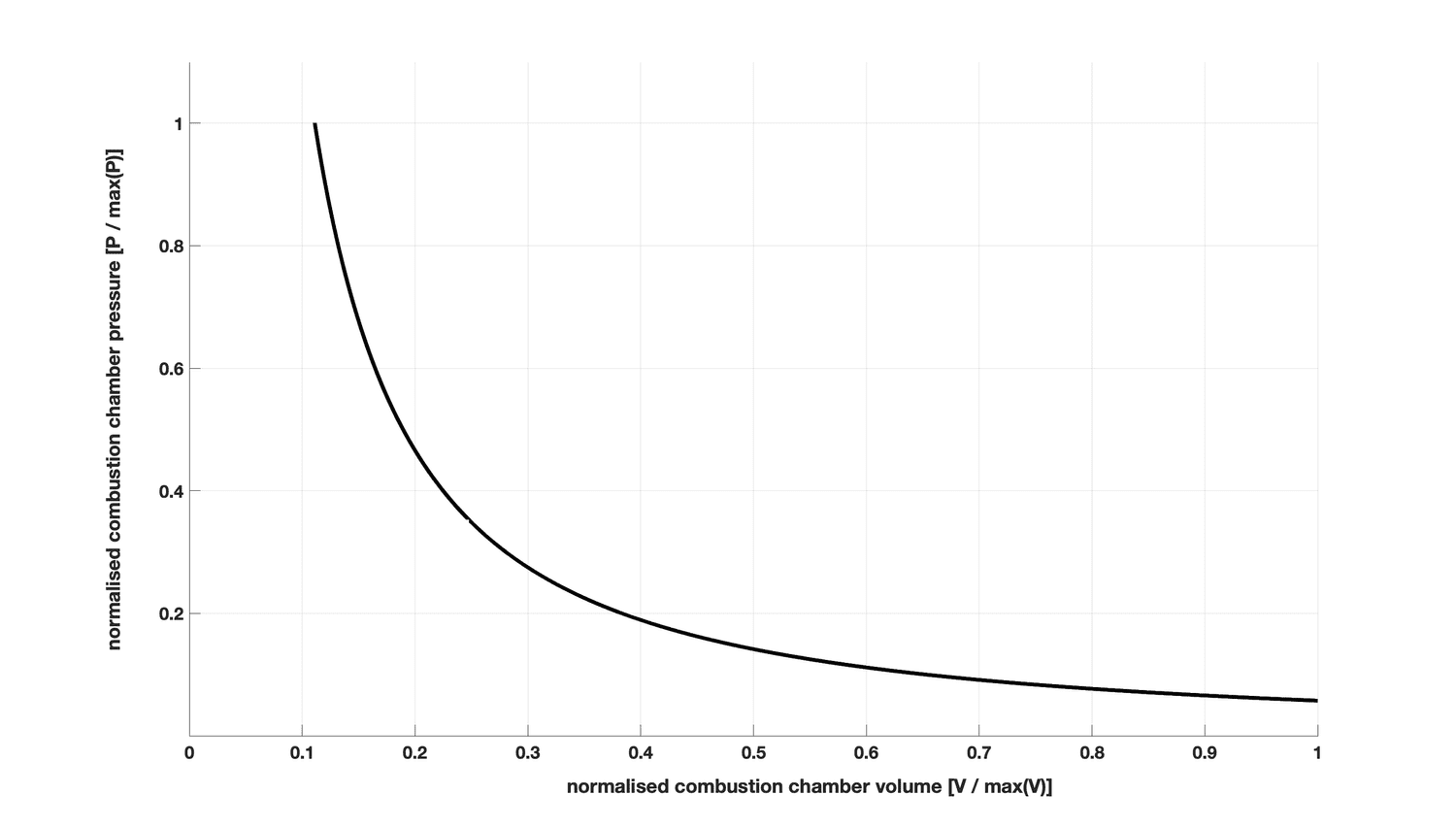
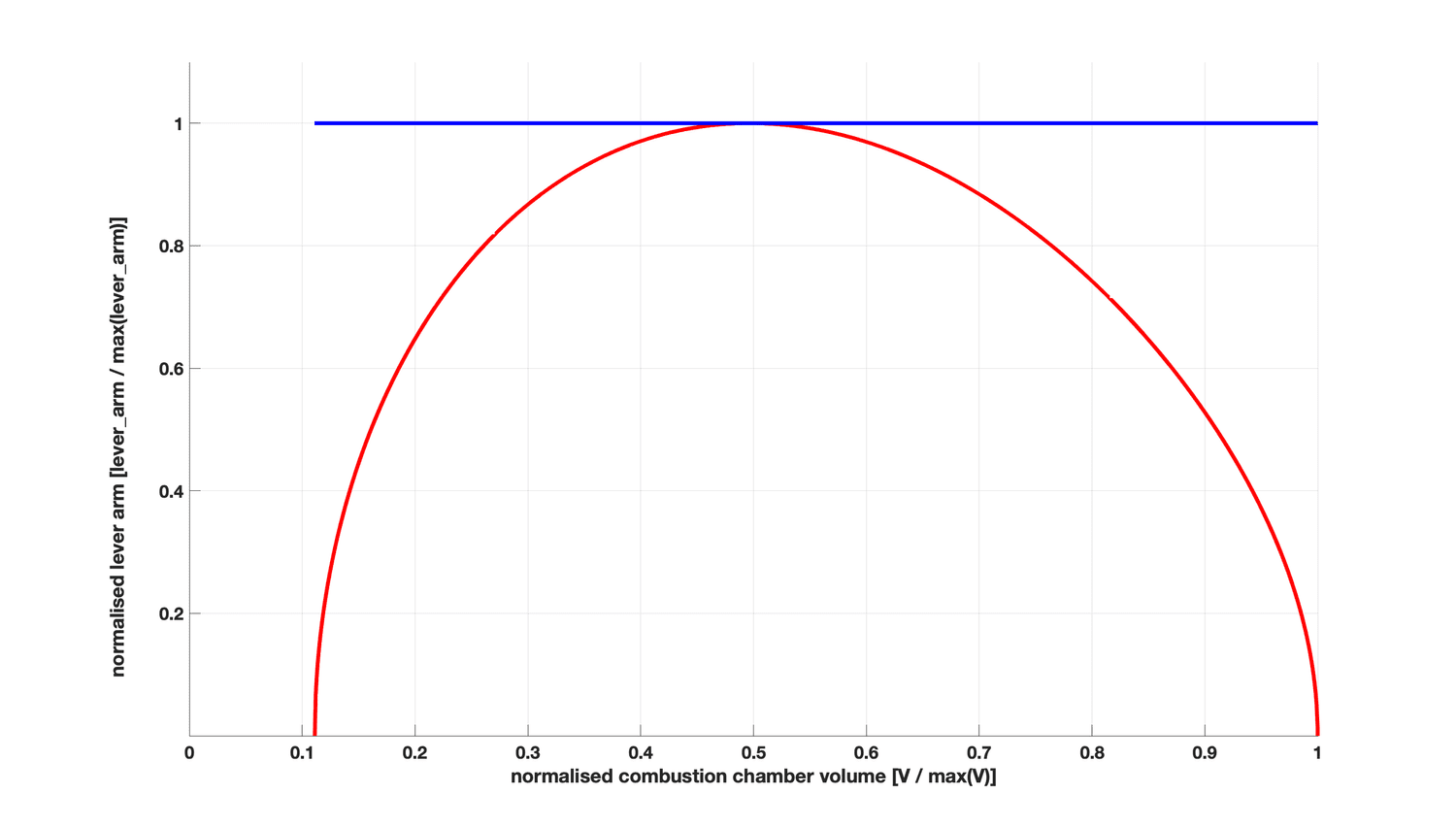
In a piston engine, combustion pressure is transferred through a connecting rod and crank. At top dead centre, when cylinder pressure is at or near its peak, the effective crank lever arm is close to zero. The lever arm then changes continuously as the crank rotates.
A rotary-vane engine applies pressure at a substantially constant radius. This gives the architecture a more consistent mechanical lever arm and the potential to convert chamber pressure into useful torque more directly.
Galt's MATLAB comparison isolates the combustion and geometry effects. Figures 5 and 6 show chamber pressure and lever arm against chamber volume, illustrating the difference between a varying piston-crank lever arm and the rotary-vane engine's constant-radius approach. The model and code are available in Galt's GitHub repository.
The rotary-vane combustion process is not assumed to be inherently more thermally efficient. Its primary advantage is architectural: direct rotary motion, favourable power-to-weight potential and fewer losses associated with reciprocating hardware. The chamber geometry may also provide conditions that support more complete combustion, which remains a subject for testing and development.
Why previous rotary-vane engines have struggled
Rotary-vane concepts are not new. Historical patents, proposed automotive applications and demonstration engines have shown the principle in different forms, but none has progressed to a durable commercial platform.
The recurring problem has been shaft coordination. Earlier designs used gears, cams and other mechanical linkages to keep the two vane sets in the correct relationship. Those linkages are exposed to alternating combustion shock loads. Over time, the loads create wear, fatigue and failure in the mechanism responsible for timing the engine.
This is the barrier Galt Engine is designed to remove.
The Galt breakthrough: electrical control
Galt replaces the mechanically constrained timing system with reversible electrical machines and position sensing on each shaft. A controller regulates shaft motion so the vanes reach the required position at the required time through intake, compression, combustion and exhaust.
Electrical control performs the coordinating function of a crankshaft without a fixed crank mechanism. In practical terms, it creates a software crankshaft.
Figure 7 provides a system-level view of this architecture and its core control relationship.
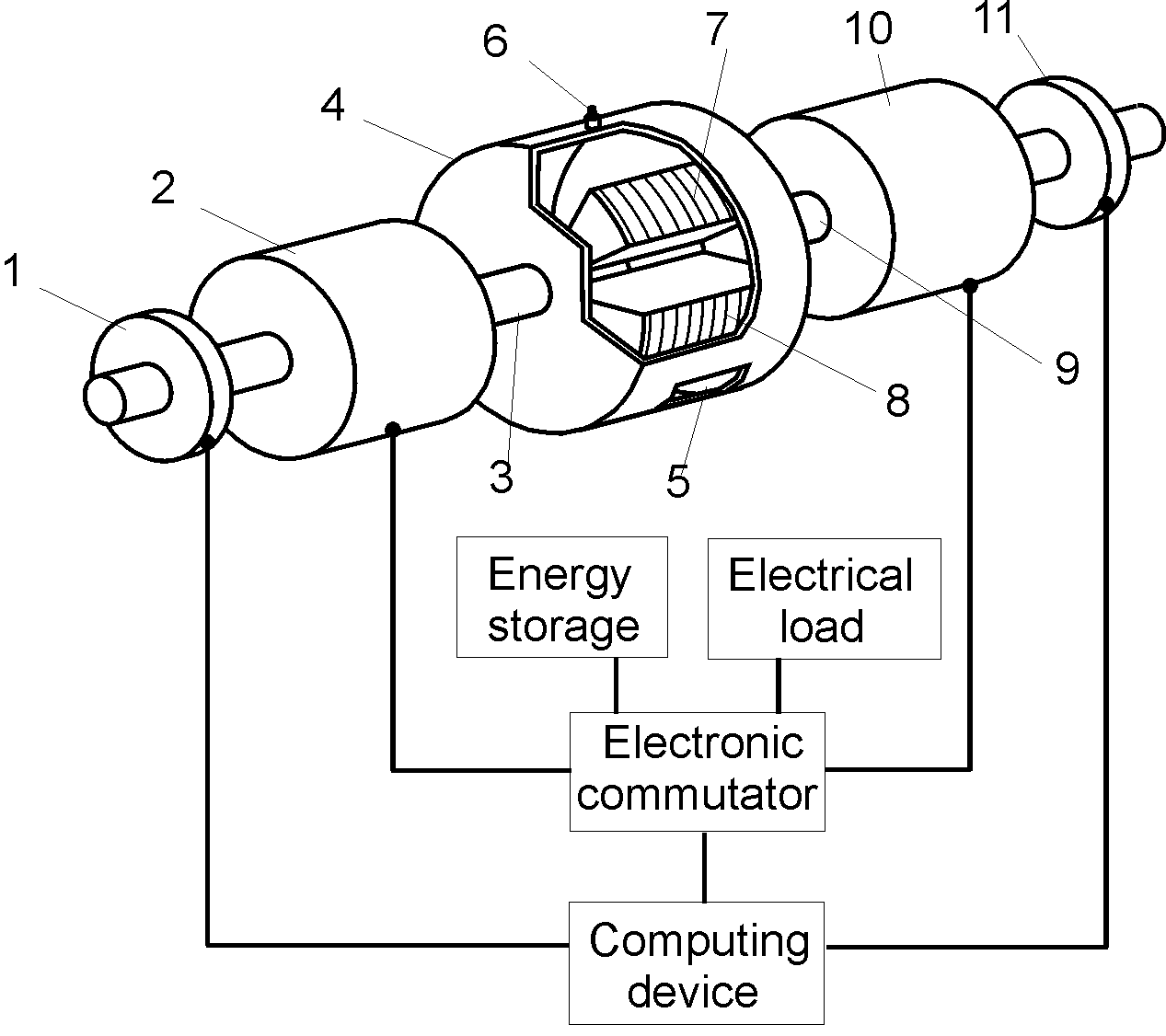
Key components of Galt engine shown in figure 7: 1 and 11, shaft position sensor; 2 and 10, reversible electrical machine; 3, rotating shaft A; 4, combustion chamber; 5, intake port (exhaust port not shown); 6, spark plug (in case of a spark ignition engine); 7, set of vanes attached to shaft A; 8, set of vanes attached to shaft B; 9, rotating shaft B.
Control that can adapt in software
Once shaft motion is controlled electrically rather than by a fixed linkage, timing and chamber volume no longer need to follow a single mechanical profile. The control system can vary vane position and compression behaviour to suit load, speed, fuel and operating conditions.
This creates a pathway to capabilities including variable compression ratio and combustion strategies such as homogeneous charge compression ignition (HCCI). These are development opportunities rather than fixed claims about the current prototype, and will be validated as the engine programme progresses.
The electrical machines also provide a direct route for harvesting combustion energy as electricity, while retaining the option to deliver mechanical shaft power. Future development will demonstrate how the system moves between, or combines, these operating modes.
Where Galt Engine fits
Galt Engine combines the combustion chamber of a rotary-vane engine with the controllability of an electrically regulated power platform. Its purpose is not simply to replace one mechanical linkage with another. It is to make a previously difficult engine architecture controllable, adaptable and practical.
Current work is focused on progressing from partial proof-of-concept prototypes and simulation results to an integrated development engine. The aim is to validate the architecture under representative loads and establish a clear path to reliable, commercially deployable power systems.
Natalia Galin presented the architecture at Hackaday Supercon in 2022.